
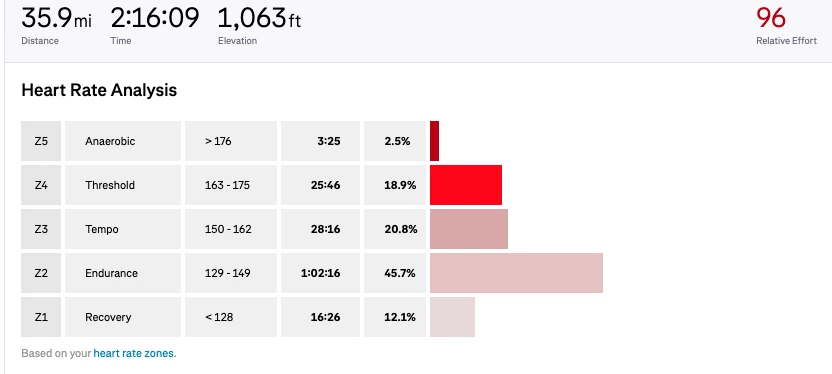
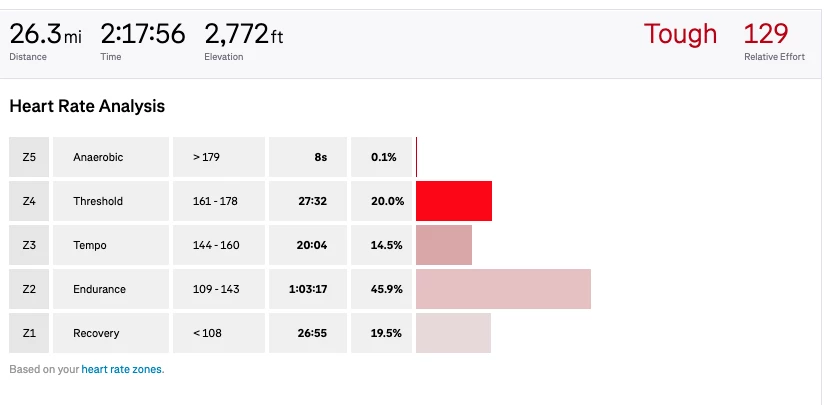
Hi, I am wondering how Strava calculates relative effort and thus the Fitness/Freshness graph? In March 2026 (recently) I did a ride with about 30 minutes of threshold/anaerobic effort in two intervals. I felt this ride was very similar to one I did in May 2025, with also nearly 30 minutes of threshold/anaerobic also in about two intervals. Both rides based RE on heart rate only (no power data).
The Mary 2025 ride received a 129 RE score and got me 2 “fitness points”. However, the March 2026 ride, which felt very similar as far as personal perceived effort, received only 96 RE and got me no “fitness points” whatsoever for that day (even though i was TIRED after).
This feels counterintuitive & confusing: that two very similar rides could register so differently. It is important to me to track relative effort/fitness to train enough but not burn out. Is it because they are in different years? Does the algorithm change? Any insight is appreciated, as I’ve been frustrated by the fitness/freshness graph for a long time now. Thanks!!! --Sondra (otherwise devoted Strav-ee)